Some homes seem to collect dust no matter how often you clean.
You wipe a table, and a thin layer comes back a day later. Sunlight hits the room and you can see particles floating in the air. The bedroom feels dusty, shelves look dull, and dark furniture shows everything.
Dust is normal. Every home has it. But when it builds up quickly, it usually means dust is entering, circulating, settling, or being disturbed faster than your cleaning routine can keep up.
The fix is not always “clean more.” It is often about finding where dust is coming from and how it moves through the house.
Dust comes from more than one source
House dust is a mix of many small particles.
It can include outdoor dirt, fabric fibers, pet dander, pollen, skin flakes, hair, lint, smoke particles, cooking residue, insect debris, and particles from carpets, furniture, paper, and stored items.
That is why one cleaning method rarely solves everything. Dust can enter from outside, come from inside, collect in hidden places, and then move through the home again when air flows.
If your house gets dusty fast, start by thinking in three categories:
- What is bringing dust in?
- What is creating dust inside?
- What is moving dust around?
Outdoor dust may be entering the home
Outdoor air can bring in dust, pollen, soil, smoke particles, and pollution.
This is more noticeable if you live near a busy road, construction area, dry landscape, unpaved surface, or high-pollen area. Open windows, gaps around doors, old weatherstripping, and frequent indoor-outdoor movement can all increase the amount of dust entering the home.
Look for clues:
- Dust is worse near windows or exterior doors
- Floors near entryways get dirty quickly
- Window tracks collect grit
- Dust increases during windy days
- Pollen season makes surfaces look yellow or powdery
- Nearby construction makes the problem worse
Small habits help. Use doormats inside and outside, remove shoes near the entrance, keep window tracks clean, and avoid opening windows during dusty or smoky outdoor conditions.
If you want to track whether outdoor conditions are affecting indoor air, browse our air quality monitor guides.
HVAC filters may not be helping enough
Your HVAC filter can affect how much dust circulates through the home.
If the filter is dirty, poorly fitted, low-quality, or missing the right size, more dust can move through the system or airflow can become weaker. A clogged filter can also make the system work harder and reduce comfort.
Check:
- Whether the filter is installed in the correct direction
- Whether it fits tightly with no obvious gaps
- Whether it is overdue for replacement
- Whether dust is collecting around vents
- Whether the return grille is dirty
- Whether airflow feels weaker than usual
A higher-rated filter is not always automatically better for every system. Some systems cannot handle overly restrictive filters without airflow problems. The goal is to use a filter that fits properly, is changed on schedule, and works with your HVAC setup.
For filter choices and maintenance topics, see our filters and accessories guides.
Dust can hide in soft materials
Soft surfaces are dust reservoirs.
Carpets, rugs, curtains, bedding, upholstered furniture, pillows, pet beds, fabric storage bins, and blankets can all trap particles. When people walk, sit, sleep, shake fabric, or open curtains, some of that dust gets released back into the room.
Bedrooms often get dusty quickly because they contain bedding, clothing, curtains, rugs, and people spending hours in one space.
Helpful changes include:
- Washing bedding regularly
- Vacuuming rugs and carpets with a good filter
- Cleaning under the bed
- Reducing fabric clutter
- Washing or vacuuming curtains
- Keeping laundry from piling up
- Cleaning pet beds and soft furniture
You do not need a perfectly minimal home. But if one room is always dusty, look at the fabric load in that room.
Pets can add more than hair
Pets contribute hair, dander, tracked-in dirt, litter dust, and particles from bedding or scratching.
Even short-haired pets can add fine particles to the home. If your pet sleeps in the bedroom, sits on fabric furniture, or moves between outdoors and indoors often, the dust load can rise quickly.
Try:
- Washing pet bedding
- Brushing pets in an easy-to-clean area
- Vacuuming high-use pet zones more often
- Using washable covers on furniture
- Keeping litter boxes away from high-airflow areas
- Cleaning entry areas after outdoor walks
An air purifier may help with airborne pet dander and fine particles, especially in bedrooms or rooms where pets spend the most time. Start with our air purifier buying guides if pets are one of your main concerns.
Airflow can spread dust from room to room
Dust does not stay where it starts.
HVAC systems, fans, open doors, leaky ducts, and daily movement can move particles around the home. A room with weak cleaning but strong airflow can send dust into other areas. A dusty return vent can also recirculate particles.
Look at airflow clues:
- Dust collects around supply vents
- Return grilles look dirty
- Some rooms are dustier when the HVAC runs
- Ceiling fan blades collect thick dust
- Dust appears soon after vacuuming or moving furniture
- One room feels stuffy, dusty, or stale compared with others
Fans are useful for comfort, but they can also stir settled dust if surfaces are already loaded. Clean fan blades, vents, and nearby surfaces before running fans for long periods.
For room circulation topics, explore our fan guides and ventilation system guides.
Cleaning order matters
Sometimes dust returns quickly because cleaning moves it around instead of removing it.
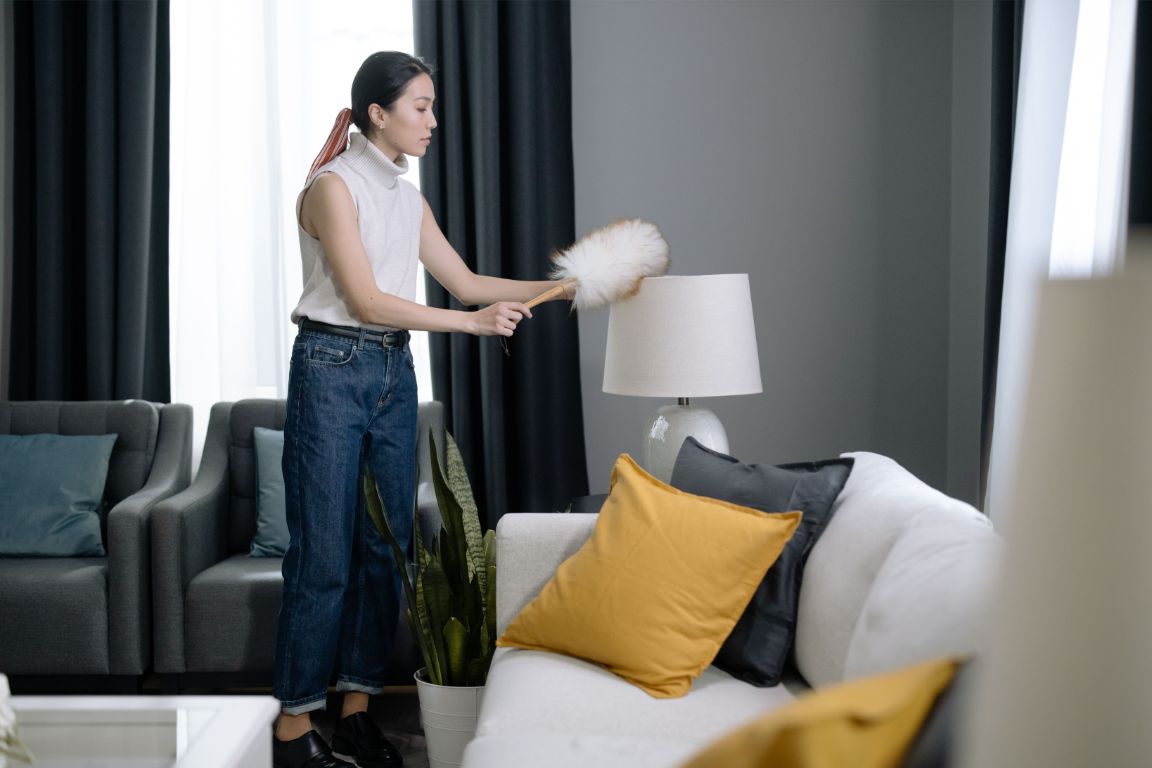
If you sweep dry floors first, dust can float and settle again. If you vacuum with a poor filter, fine particles may escape back into the air. If you dust lower surfaces before higher shelves, you may knock particles down onto areas you already cleaned.
A better order:
- Clean higher surfaces first.
- Use a damp microfiber cloth where appropriate.
- Vacuum fabric surfaces and floors.
- Clean hard floors last.
- Wash or replace cleaning cloths instead of spreading dust around.
- Clean vents, fan blades, and baseboards regularly.
Avoid aggressive dry dusting when a surface is heavily loaded. It often pushes dust into the air.
Humidity can change how dust feels
Humidity does not create dust by itself, but it changes how particles behave and how the room feels.
Very dry air can make dust feel more noticeable because particles may stay lighter and static can make them cling to surfaces. Very humid air can make dust stick to surfaces, mix with grime, or contribute to musty conditions if moisture is too high.
A comfortable humidity range can make the home feel better overall, but it is not a substitute for source control and cleaning.
If humidity seems part of the issue, read our guide on what humidity a bedroom should be or browse our humidifier and dehumidifier guides.
An air purifier can help, but it will not stop dust completely
An air purifier can reduce airborne particles when it is sized correctly, placed well, and run consistently.
It may help with:
- Fine dust
- Pollen
- Pet dander
- Smoke particles
- Particles stirred up by activity
- Bedroom or office air that feels dusty
But it will not stop dust from entering the house, settling on surfaces, or coming from fabrics and pets. It also will not replace vacuuming, HVAC filter changes, or moisture control.
Think of an air purifier as one part of the dust plan, not the whole plan.
For setup advice, see our post on how to tell whether your air purifier is actually helping.
A practical order for reducing dust
Try this order before buying more products:
- Check entry points. Use mats, remove shoes, and clean window tracks and door areas.
- Replace or inspect HVAC filters. Make sure the filter fits and is not overdue.
- Clean high dust reservoirs. Focus on bedding, rugs, curtains, pet areas, and under furniture.
- Clean vents and fan blades. Do this before running fans or HVAC heavily.
- Improve cleaning technique. Dust from top to bottom and avoid stirring particles into the air.
- Control pet zones. Wash bedding, brush pets, and vacuum high-use areas.
- Use an air purifier where it makes sense. Prioritize bedrooms, pet rooms, and rooms with visible airborne dust.
When dust may point to a bigger issue
Most dust problems are routine, but some deserve a closer look.
Pay attention if:
- Dust suddenly gets worse after HVAC work
- You see black streaks around vents
- Dust smells musty or smoky
- One room has much more dust than the rest of the home
- You suspect duct leaks or poor filtration
- Construction dust may be entering the house
- Someone’s allergies or breathing symptoms are getting worse indoors
In those cases, the issue may be ventilation, filtration, moisture, air leaks, or a source that needs more than normal cleaning.
The bottom line
A house gets dusty fast when particles are entering, forming, settling, and circulating faster than they are being removed.
Start with the basics: entry points, HVAC filters, soft surfaces, pet areas, airflow, and cleaning order. Then decide whether an air purifier, better filtration, ventilation improvements, or humidity control would actually solve the pattern you see.
Dust will never disappear completely, but it should not feel like it comes back immediately after every cleaning.