
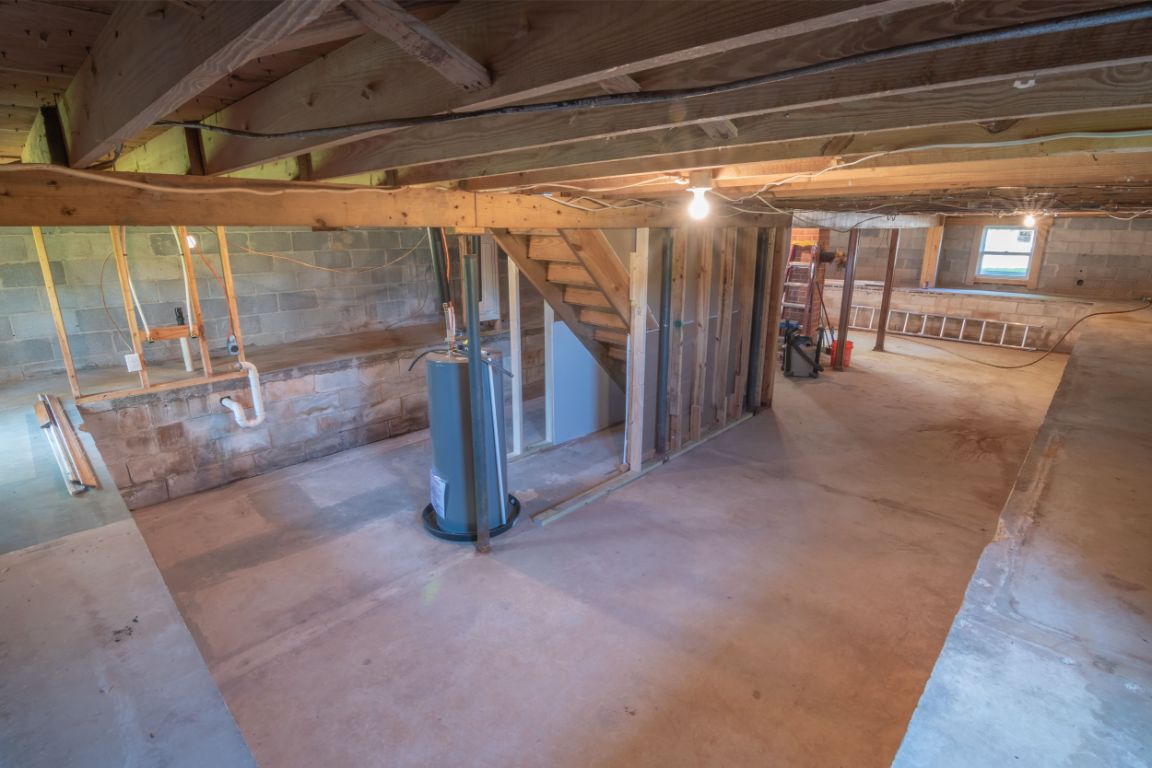
A musty basement smell usually means moisture has been hanging around somewhere.
It might be obvious: damp carpet, wet boxes, condensation on pipes, or water marks on the wall. But sometimes the basement looks mostly fine and still has that stale, earthy smell when you walk downstairs.
That smell is not something to ignore. It does not always mean there is a serious mold problem, but it does mean the basement needs a closer look. Basements are naturally more likely to hold moisture because they sit partly or fully below ground, often with less sunlight, less airflow, and cooler surfaces than the rest of the house.
Here is how to narrow down what is causing the smell and what to try first.
Start with moisture, not air freshener
A musty smell is rarely solved by covering it up.
Candles, plug-in fragrances, sprays, and odor absorbers may make the basement smell better for a short time, but they do not fix the reason the smell started. If moisture is still present, the odor usually comes back.
The EPA’s mold guidance is direct: when mold is a problem, you need to clean up the mold and fix the water problem. Moisture control is the real starting point, not perfume or stronger cleaning products.
Before buying anything, look for signs of moisture:
- Damp concrete or flooring
- Musty cardboard boxes
- Condensation on windows, pipes, or walls
- Rust on metal shelves, tools, or appliances
- Peeling paint or bubbling wall surfaces
- Water stains near corners, baseboards, or foundation walls
- A smell that gets worse after rain
If the odor changes with weather, that is a useful clue. Rainy weeks, snowmelt, humid summers, and poor drainage can all make basement moisture worse.
Check the humidity level
A small humidity meter can tell you a lot.
Basements often feel cooler than the rest of the house, and cooler air can make moisture problems easier to miss until an odor appears. A hygrometer helps you see whether the basement is staying damp even when there is no standing water.
As a general indoor target, many homes do best around 30% to 50% relative humidity. EPA guidance also notes that reducing indoor humidity can help reduce mold growth, including through dehumidifiers, ventilation, and exhaust fans where appropriate. citeturn863343search4
If your basement regularly sits above that range, especially for long periods, a dehumidifier may help. But if you see water coming in, wet walls, or repeated puddles, the dehumidifier should be treated as support—not the full fix.
Look at what is stored in the basement
Basement odor often hides in storage.
Cardboard, old fabric, books, rugs, upholstered furniture, luggage, and holiday decorations can absorb moisture and hold smells for a long time. Even if the basement air improves, stored items may continue releasing odor.
Check:
- Cardboard boxes sitting directly on the floor
- Old rugs or carpet remnants
- Fabric storage bins
- Wooden furniture stored against walls
- Shoes, sports gear, or camping gear
- Anything that feels soft, damp, warped, or stained
Move stored items away from exterior walls and off the floor where possible. Plastic bins with lids are usually better than cardboard in a basement, but they are not a substitute for controlling humidity.
Check airflow and ventilation
A basement with little air movement can smell stale even when it is not actively wet.
Poor airflow allows damp air, odors, and indoor pollutants to linger. The CDC recommends using exhaust fans in kitchens and bathrooms that vent outside and notes that air conditioners or dehumidifiers can help keep humidity low.
In a basement, useful airflow steps may include:
- Keeping interior doors open when practical
- Running a fan to move air through the space
- Making sure bathroom or laundry exhaust fans vent outdoors
- Checking whether supply and return vents are blocked
- Avoiding piles of storage that trap air against walls
- Using mechanical ventilation where the space needs it
A fan alone will not remove moisture from the home. It only moves air around. But better circulation can help reduce stagnant pockets and make a dehumidifier or ventilation setup work more effectively.
Explore our ventilation system guides if the basement has poor airflow, recurring odors, or moisture that seems connected to closed-off rooms.
Do not ignore leaks and drainage
A dehumidifier can manage damp air. It cannot solve water intrusion.
If the smell gets worse after rain, look outside as well as inside. Basement moisture can come from clogged gutters, poor grading, downspouts dumping water near the foundation, cracks, window wells, plumbing leaks, or condensation from cold pipes.
Inside the basement, check:
- Corners and baseboards
- Around windows and window wells
- Near the water heater, washer, sink, or utility lines
- Around sump pump areas
- Beneath stored items
- Behind furniture close to exterior walls
If water is entering the basement, that source needs to be fixed. Otherwise, the smell will likely return no matter how often you clean or run equipment.
When an air purifier helps and when it does not
An air purifier can help with airborne particles and some odors, depending on the filter design. It may be useful after the moisture source has been addressed, especially if the basement is dusty, used often, or connected to the rest of the home.
But an air purifier should not be the first solution for a damp basement.
If the odor is caused by wet materials, hidden mold, high humidity, or water intrusion, filtration will not solve the source. You may get temporary improvement, but the room can still remain unhealthy or uncomfortable.
Start with moisture, cleanup, and airflow first. Then consider an air purifier if particles, dust, or lingering airborne odors are still part of the problem.
A practical order for fixing a musty basement
Use this order before spending money randomly:
- Measure humidity. Use a hygrometer for a few days and check whether humidity stays high.
- Look for water signs. Check walls, floors, corners, pipes, windows, and stored items.
- Remove damp materials. Cardboard, rugs, fabrics, and soft items can hold odor.
- Improve airflow. Open interior doors, clear blocked vents, and use fans where helpful.
- Use a dehumidifier if humidity is high. Choose a size and drainage setup that matches the space.
- Investigate leaks or drainage problems. Fix the source instead of only treating the air.
- Clean only after the moisture issue is controlled. Otherwise the smell may come back.
For ongoing tracking, an air quality monitor with humidity readings can help you see whether the basement is improving over time.
When to get professional help
A musty smell deserves more attention when it comes with visible mold, recurring water damage, strong odors, health symptoms, or a history of flooding.
You should also be careful if the HVAC system may be contaminated by mold or connected to a moisture problem. EPA guidance recommends consulting appropriate HVAC guidance when mold may be present in the system.
Consider qualified help when:
- Mold covers a large area
- Water keeps entering after rain
- You smell sewage, gas, fuel, or strong chemical odors
- The basement has repeated flooding
- The odor seems to spread through the HVAC system
- Someone in the home has asthma, allergies, or respiratory concerns
A portable appliance can support comfort, but it should not replace repair work when the building has a moisture problem.
The bottom line
A musty basement smell is usually a moisture clue.
Start by measuring humidity, checking for water signs, improving airflow, and removing damp stored items. A dehumidifier can help when the air is too damp, but leaks, drainage problems, visible mold, or water-damaged materials need to be handled at the source.
Once the basement is dry and stable, then it makes sense to think about air purifiers, monitors, and other comfort tools. Start with the moisture problem first, and the smell becomes much easier to solve.