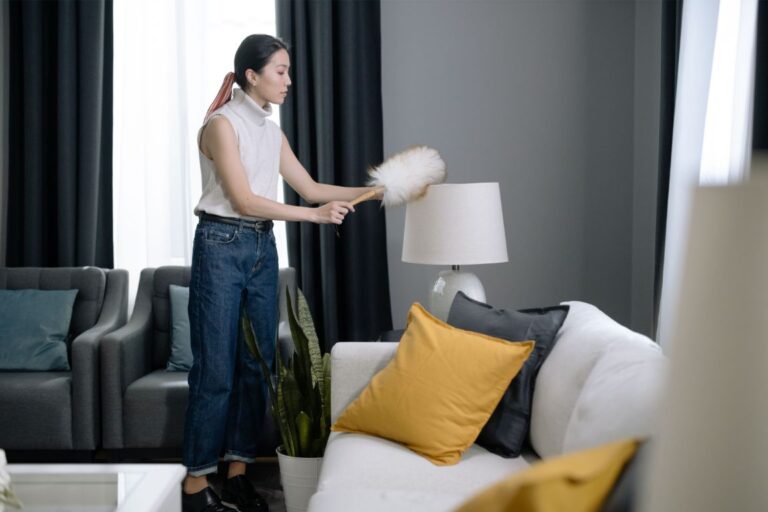
A room can look clean, smell fine, and still feel uncomfortable after you have been in it for a while.
Maybe the air feels heavy by mid-afternoon. Maybe you wake up wanting to open a window, even though the room is tidy. Or maybe one room always feels more closed-in than the rest of the house.
“Stuffy” is not one single problem. It is usually a mix of airflow, temperature, humidity, occupancy, and whatever is building up indoors. Cleaning helps with dust and surfaces, but it does not automatically refresh the air or solve a ventilation issue.
Here is how to narrow down what is making a room feel stale—and what is actually worth trying first.
Start with the simplest question: does the room get fresh air?
A closed bedroom with one or two people sleeping in it for eight hours can feel very different by morning than it did at bedtime. The same thing happens in a home office with the door shut all day.
Fresh outdoor air helps dilute indoor pollutants and replace air that has been sitting in the room. When a room has limited ventilation, it can feel warmer, more humid, and less comfortable even when there is no obvious smell.
Try a simple test:
- Open a window for 10 to 15 minutes when outdoor conditions allow.
- Open the bedroom or office door.
- Run a ceiling fan or portable fan to move air through the space.
- Notice whether the room feels noticeably better afterward.
If it does, airflow is probably part of the problem.
Carbon dioxide can rise in occupied rooms
People breathe out carbon dioxide. In a room with closed windows and doors, carbon dioxide can build up over time, especially when several people are present or the room is small.
That does not mean carbon dioxide is always the only reason a room feels stuffy. It is better thought of as a clue that the room may not be getting enough fresh-air exchange for the number of people using it.
A basic indoor air quality monitor can be useful here. Look for patterns instead of obsessing over a single number. If readings rise overnight in a bedroom or climb steadily during a workday in a closed office, improving ventilation may make more sense than buying another cleaning product.
Humidity can make clean air feel heavy
Humidity changes how a room feels.
When indoor air is too humid, it can feel sticky, stale, and harder to cool. Bathrooms, basements, laundry areas, and bedrooms with poor airflow often show this problem first. You may also notice condensation on windows, a musty smell, slow-drying towels, or clothes that never seem to feel fully dry.
A dehumidifier can help when excess moisture is the real issue. But it should not be used to cover up a leak, flooding, persistent condensation, or visible mold. Those problems need to be investigated at the source.
On the other side, very dry air can also feel unpleasant. Dryness may make a room feel scratchy or irritating, particularly during heating season. In that case, a humidifier may help—but only if you keep it clean and avoid adding too much moisture.
Heat and poor air movement often get confused with bad air
Sometimes the room is not polluted. It is simply hot, still, or poorly circulated.
Warm air can collect upstairs, near windows, in rooms with direct afternoon sun, or in corners that do not get much airflow from the HVAC system. If the room feels better as soon as a fan is running, the issue may be circulation rather than filtration.
A fan will not remove particles or odors from the air, but it can make a room feel more comfortable by moving air across the space. In some rooms, a small change in fan placement makes a bigger difference than a more expensive appliance.
Try placing a fan so it supports the air path through the room instead of pointing directly at one spot. For example, position it near an open door or window to encourage air movement across the space.
Everyday indoor sources still matter
A clean room can still contain things that affect comfort.
Common sources include:
- Cooking odors drifting from another part of the home
- Cleaning sprays, scented products, candles, or air fresheners
- New furniture, paint, flooring, or stored items
- Pet dander and tracked-in outdoor particles
- Laundry, damp towels, or shoes stored in the room
- Dust collecting around vents, rugs, curtains, and upholstered furniture
You do not need to remove every possible source. Start by noticing when the room feels worst. Does it happen after cooking? After showering? Only when the door is closed? Only after the HVAC has been running?
Patterns are more useful than guessing.
An air purifier may help—but only with the right problem
An air purifier can be helpful when particles are a major concern. That includes dust, pollen, pet dander, smoke particles, and some airborne allergens.
It is less useful when the main issue is trapped heat, high humidity, poor ventilation, or a hidden moisture problem. An air purifier also cannot fix a blocked vent, a bathroom fan that does not exhaust properly, or a room that is too small for the number of people using it.
Before choosing a purifier, ask:
- Is the problem dust, smoke, pets, allergies, or something else?
- How large is the room?
- Will the purifier run often enough to make a difference?
- Is the noise level realistic for sleeping or working?
- Are replacement filters available and affordable?
The right purifier can improve a room. It just works best as part of a larger comfort plan, not as a cure-all.
A practical order for solving a stuffy room
When a room feels stale, start with the least complicated change first.
- Improve airflow. Open a window or door when practical, and use a fan to move air through the room.
- Check temperature and humidity. A small thermometer-hygrometer can reveal whether the room is hotter, colder, drier, or more humid than expected.
- Look for moisture clues. Check for condensation, damp fabrics, musty smells, water stains, or slow-drying areas.
- Reduce obvious sources. Move scented products, damp laundry, or strong-smelling items out of the room and see whether it changes.
- Use the right equipment for the pattern. Consider a dehumidifier for dampness, a fan for circulation, an air purifier for particles, or an air quality monitor when you need clearer information.
When a stuffy room needs more than a simple fix
A room deserves closer attention when the problem is persistent or comes with warning signs.
Take it seriously if you notice:
- A gas smell, exhaust smell, or signs of combustion problems
- Visible mold or recurring water damage
- Persistent condensation or damp surfaces
- Headaches, dizziness, or symptoms that improve when you leave the room
- A bathroom or kitchen fan that does not seem to remove moisture or odors
- A room that is dramatically hotter, colder, or more humid than the rest of the home
In those cases, it may be time to speak with a qualified HVAC, ventilation, moisture-control, or indoor-air professional.
The bottom line
A stuffy room is usually telling you something about how the space is being used.
It may need more fresh air, better circulation, lower humidity, fewer indoor sources, or a more suitable piece of equipment. Start with the room itself before shopping for a product. Once you understand the pattern, the right solution becomes much easier to choose.